
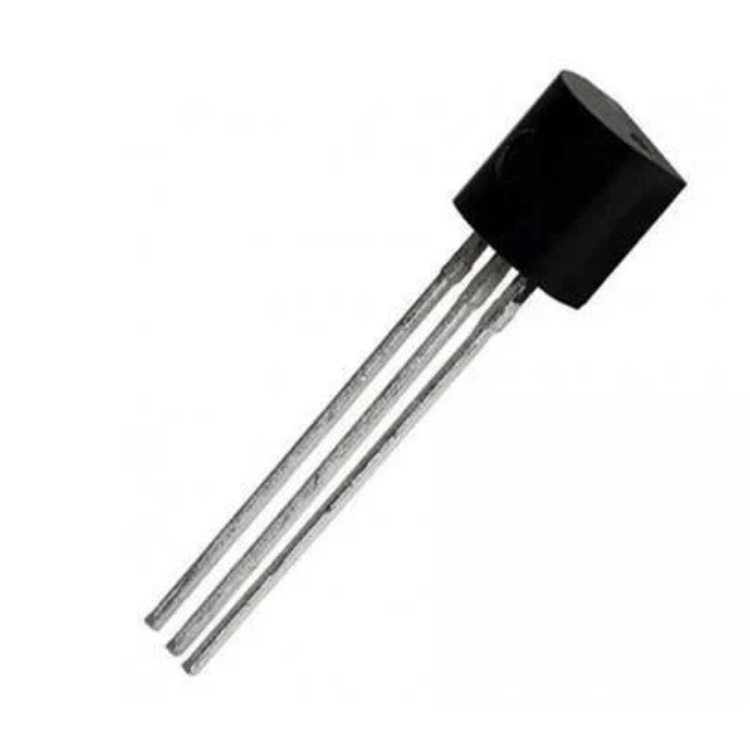
Description
A triode is an electronic amplifying vacuum tube (also known as a valve) containing three electrodes: a thermionic cathode, a grid, and a plate (anode). It was the first electronic amplification device, enabling amplified radio technology and long-distance telephony. Triodes were widely used in consumer electronics until the 1970s, when they were replaced by transistors.
Key features and functions:
- Three electrodes: The thermionic cathode emits electrons, the grid controls the flow of these electrons, and the plate (anode) collects them.
-
Amplification: Triodes amplify signals by controlling the current flow between the cathode and plate.
-
Vacuum tube: The triode operates within an evacuated glass envelope, which prevents electrons from colliding with gas molecules.
-
History: Invented by Lee De Forest in 1906, it revolutionised electronics by enabling amplification.
-
Applications: Triodes were used in radios, televisions, and various electronic circuits.Modern use: While largely replaced by transistors, triodes are still used in some specialised applications, such as high-frequency radio transmitters and high-power audio amplifiers.
Specifications:
- Type: NPN/PNP
- Voltage: 40 – 160 V
- Current: 50-600 mA
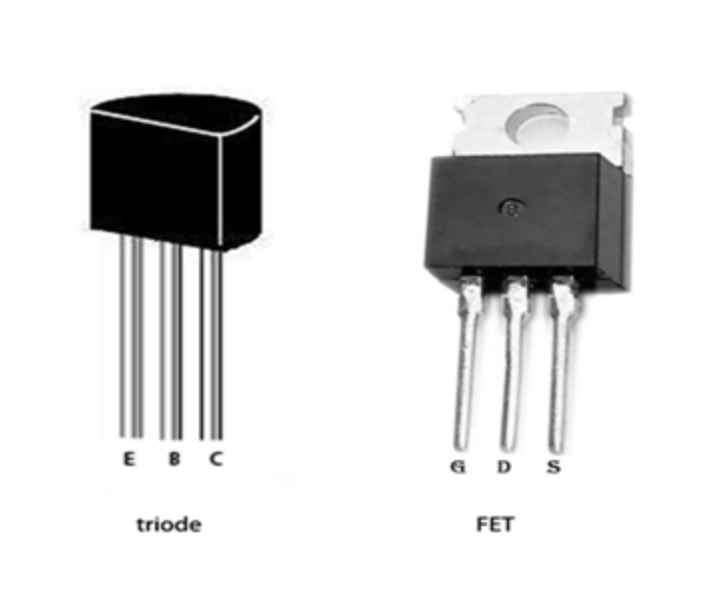
What is the difference between the Triode and FET
Packing List:
1 x Selected Triode Type
Options:
- BC327
- BC337
- BC517
- BC547
- BC548
- BC549
- BC550
- BC556
- BC557
- BC558
- A1015
- C945
- C1815
- S8050
- S8550
- S9012
- S9013
- S9014
- S9015
- S9018
- 2 N2222
- 2 N3904
- 2 N3906
- 2 N5401
- 2 N5551


